

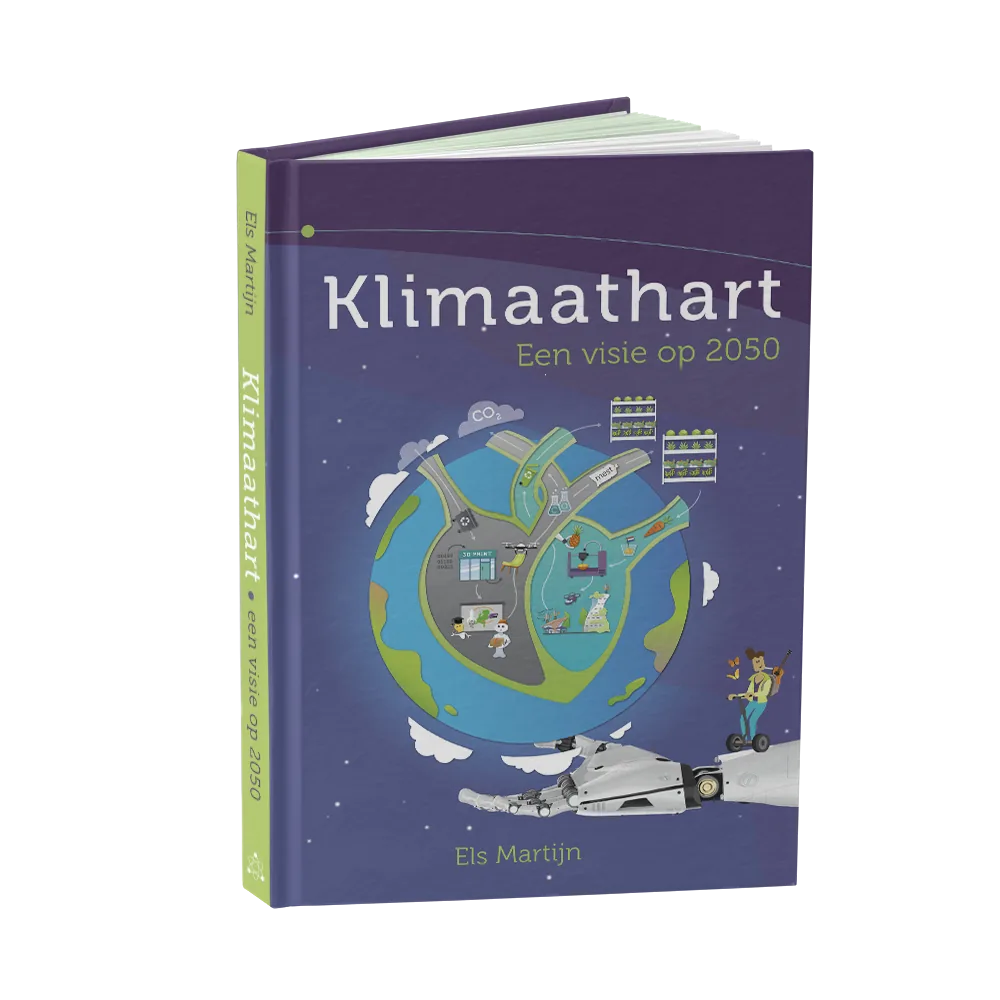
Climate Hearth sketches what our surroundings look like once climate, the social fabric and the economy are back in balance. The book runs from today's exhausted heart to a world that has caught its breath again by 2050 at the latest.
Climate Hearth
What the Climate Hearth beats on
- 01
Climate
Climate change affects life on earth. Greenhouse gases are rising and the earth's reserves are shrinking. Humanity will have to adapt.
- 02
Social
Population growth combined with the pursuit of power and money creates an imbalance that threatens our health.
- 03
Economy
The limits of economic growth have been reached. New impulses are needed to realise our need for growth and development.
The Climate Hearth is exhausted
The lungs of the earth - its greenhouse gases - are polluted, and the heartbeat, our food supply, has weakened as a result. Getting the heart back in shape takes a transition of de-stressing, unburdening, changing and enjoying.
Vlog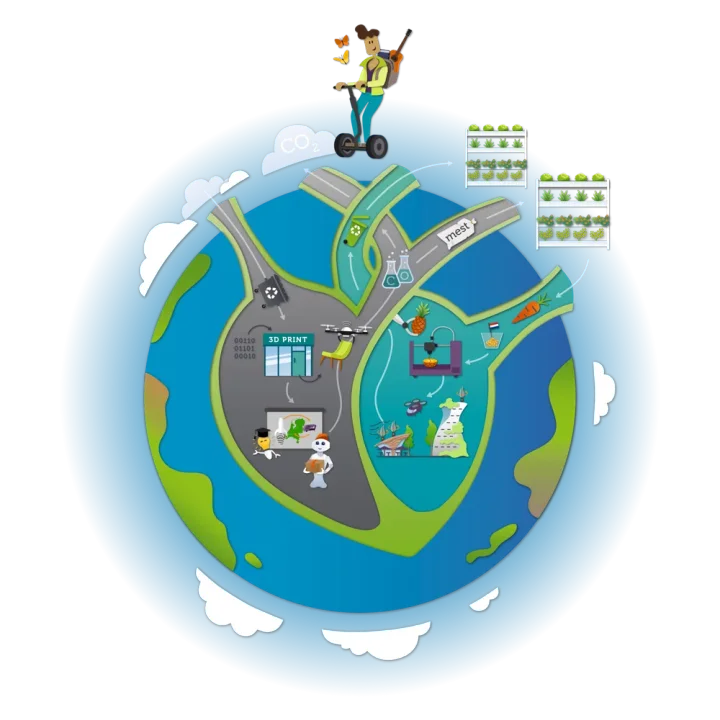
The transitions towards a healthy Klimaathart
De-stressing, unburdening, changing and enjoying are the four phases we need to go through to get a healthy, fit climate heart again.
 1
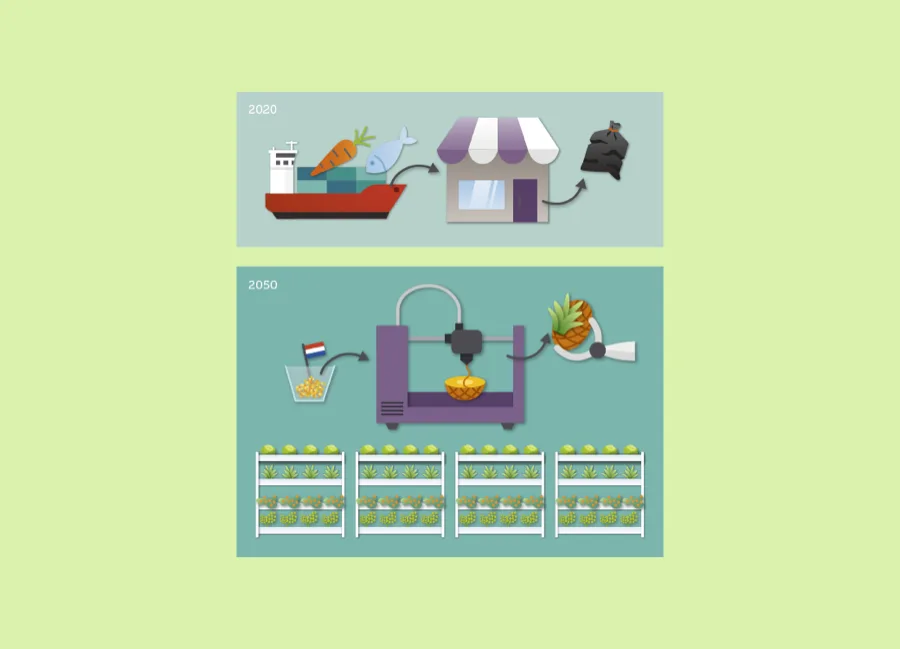
1Food transition
Eating differently and producing differently, with the same pattern of consumption.
 2
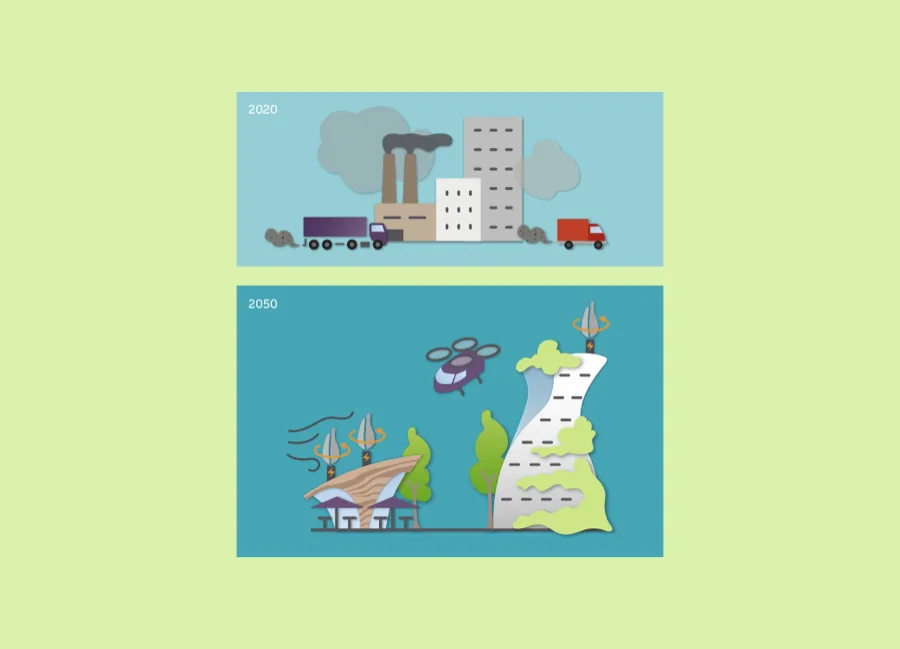
2City transition
Living sustainably among like-minded people, around squares for knowledge and leisure.
 3
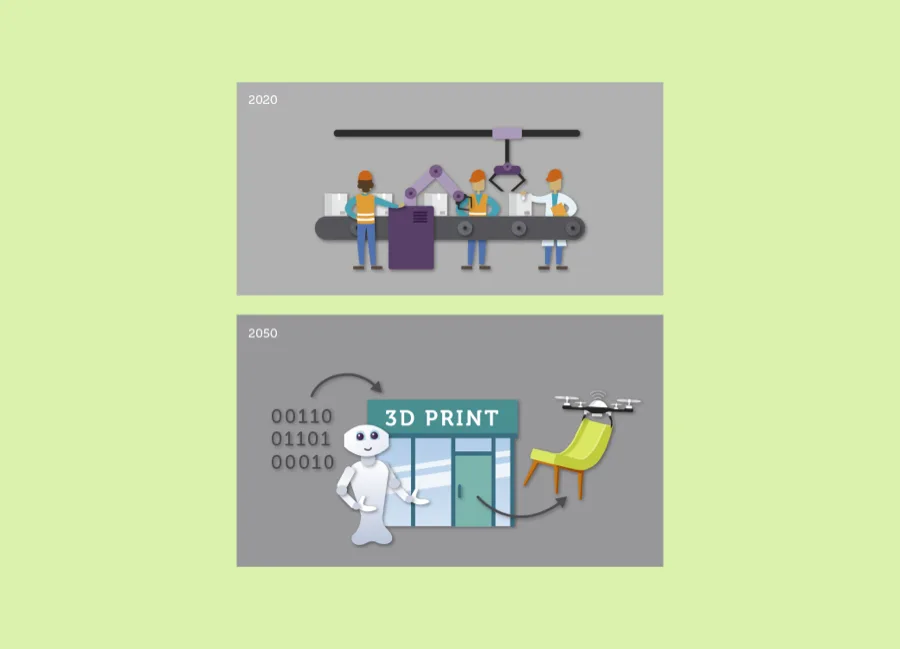
3Smart-tech transition
Robotics and artificial intelligence in support of everyday ease.
 4
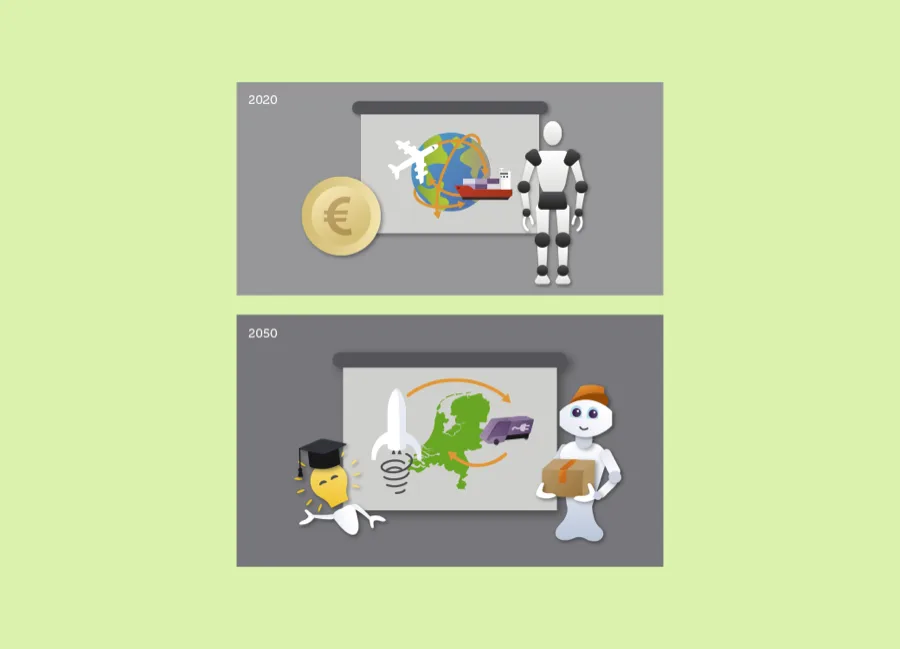
4Transport transition
CO₂-neutral and low-noise transport, largely locally oriented.
The future: Climate Hearth in balance
By 2050 at the latest the climate heart is in balance again. Growth of the world population is then possible under conditions we are used to: a healthy living environment with enough local food, in which money is subordinate to knowledge.
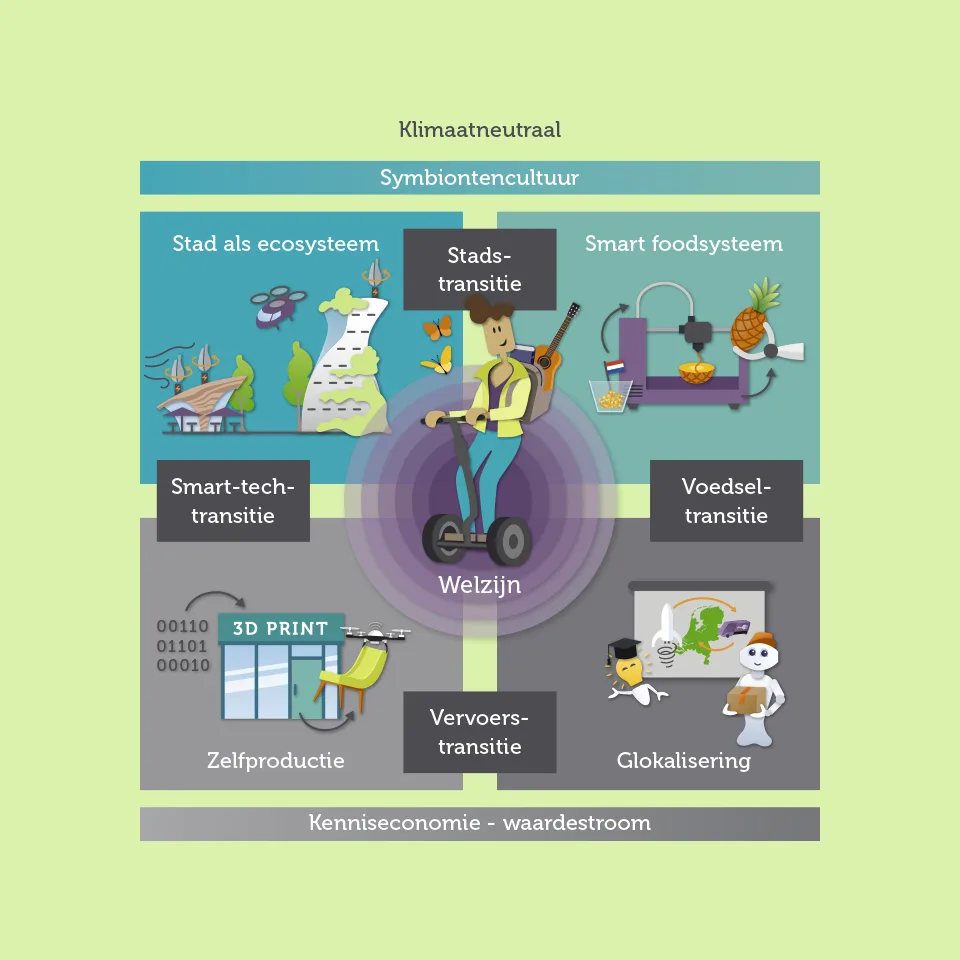
The Climate Hearth, a vision for 2050
The 2050 climate model paints a picture of our living environment in 2050. Various transitions set in motion from 2020 onwards lead to an environment in which human well-being is what we aim for.
What our world looks like in 2050 has been worked out by people at Firm of the Future in a number of blogs and white papers. You can read and watch them below.
Smart Food System
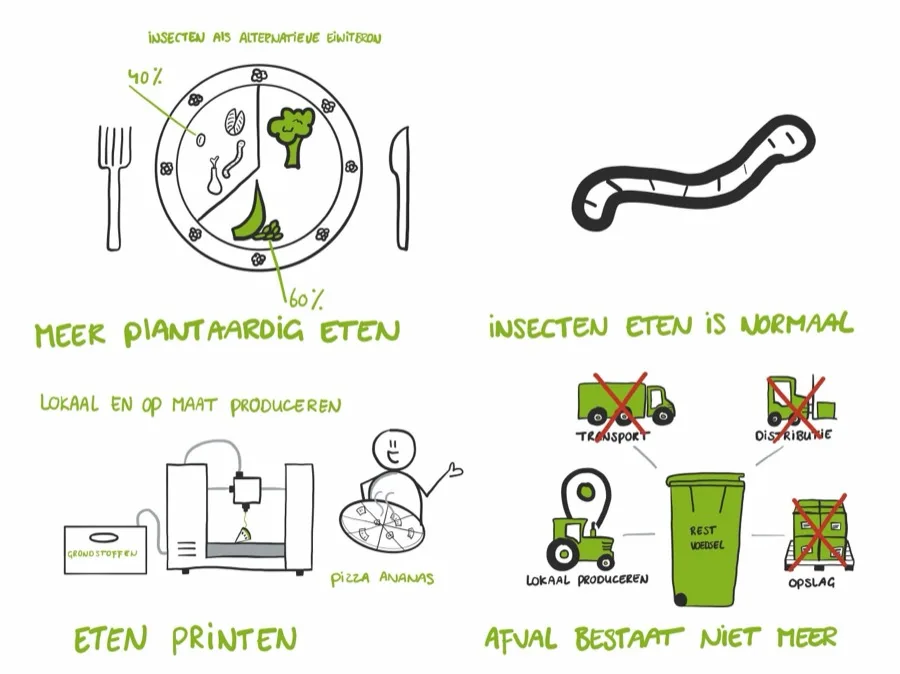
The Smart Food System stands for consuming differently, producing differently, distributing differently and wasting less.
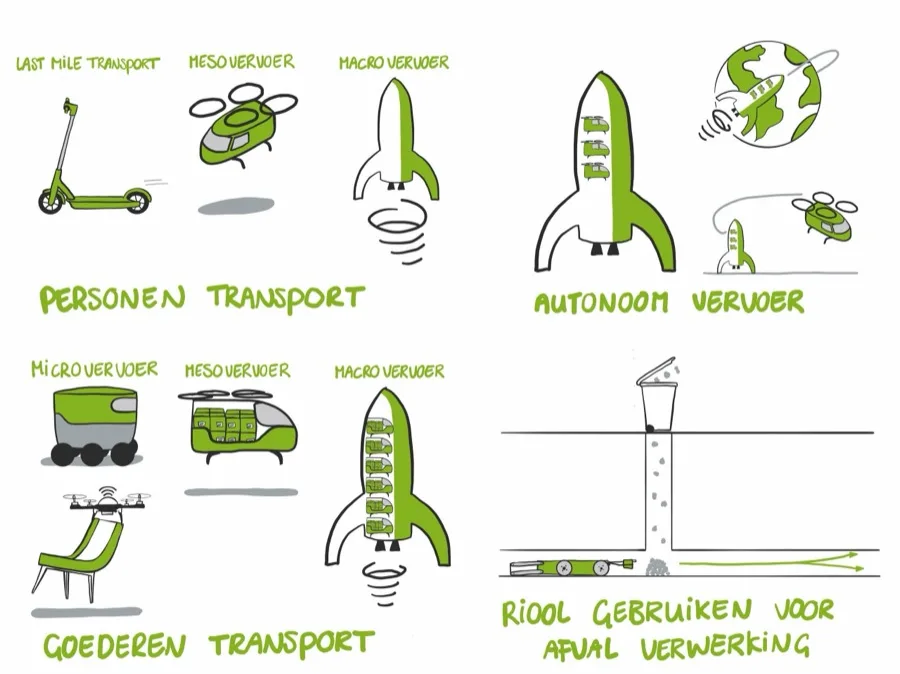
Mobility
The mobility question falls into three forms that apply to both passenger and freight transport: micro, macro and meso.
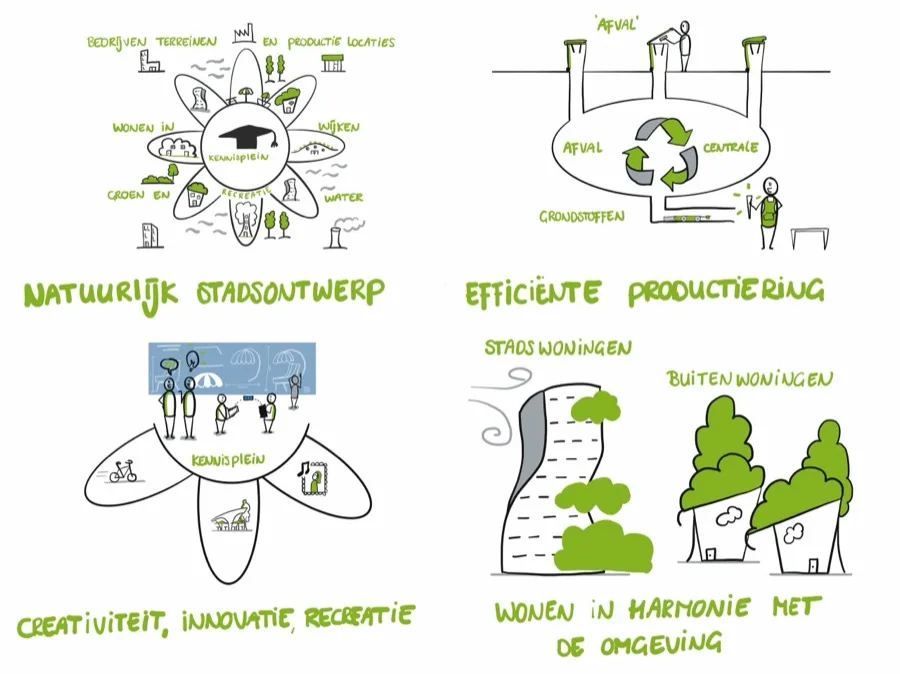
The city as an ecosystem
Cities will become smaller and organised around squares for knowledge and leisure. Sustainable materials, plenty of green and a fitting infrastructure make for a safe home base.
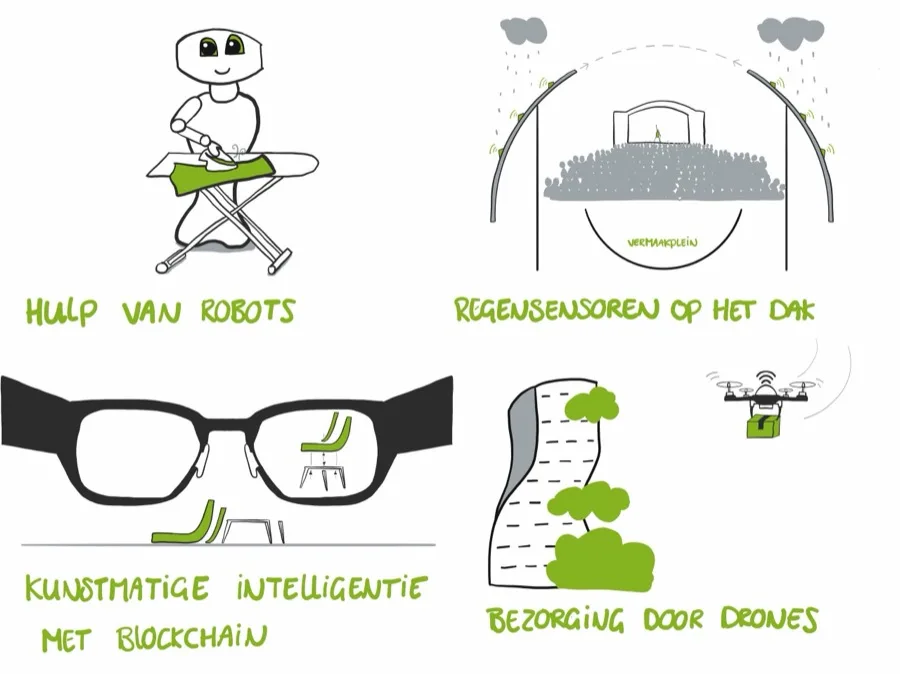
Self-production
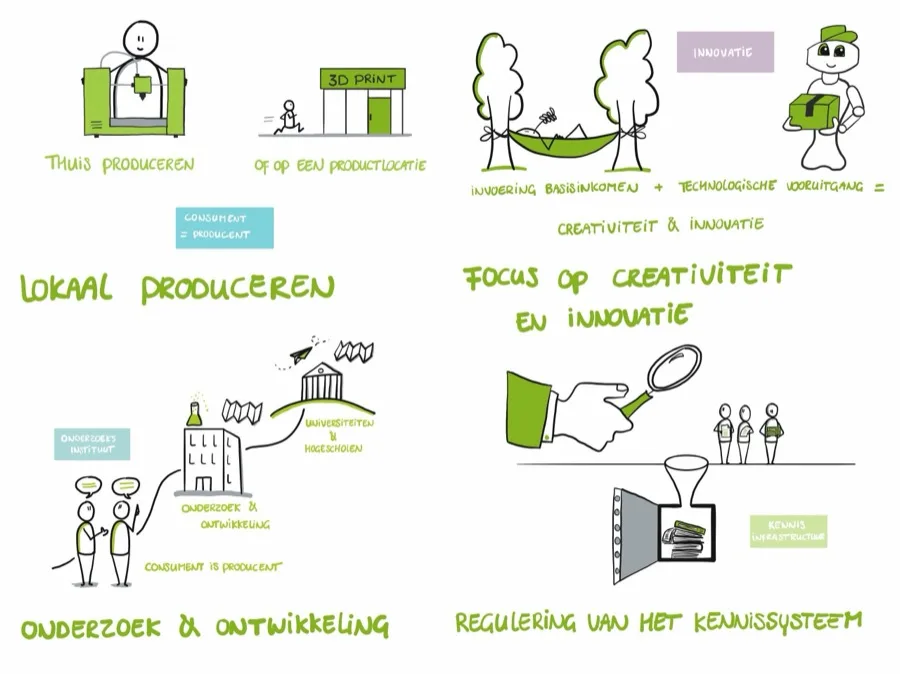
The consumer also becomes a producer. Much can be made at home with a 3D printer; for larger goods the print shop around the corner steps in.
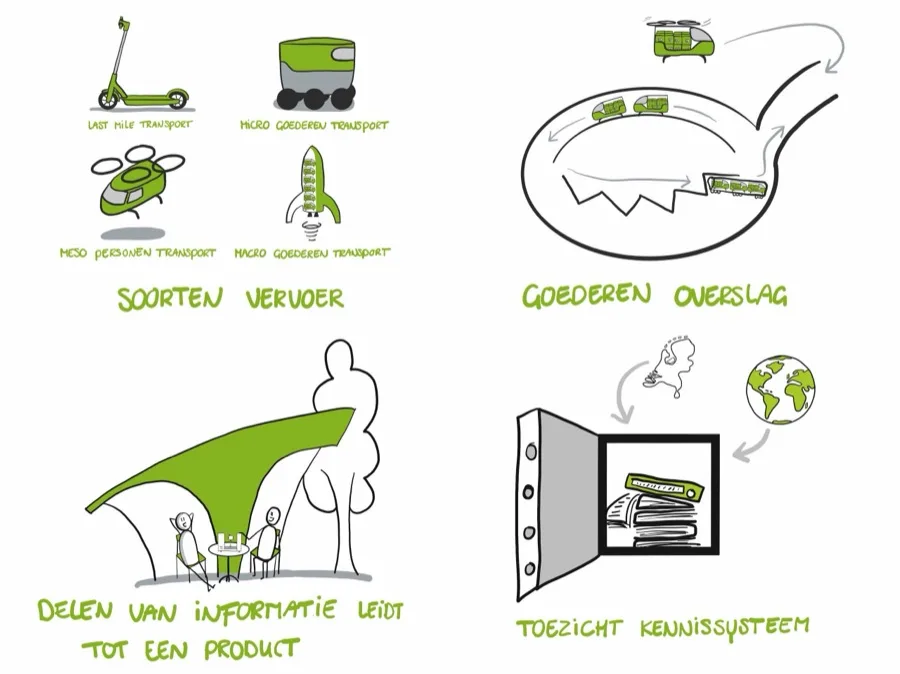
Glocal
Doing business locally while gathering knowledge and skills globally. Turning waste streams into local raw materials so that less transport and storage is needed.
Knowledge economy
Knowledge becomes the value stream of the economy: what you know and share weighs more than what you own.
Symbiont culture
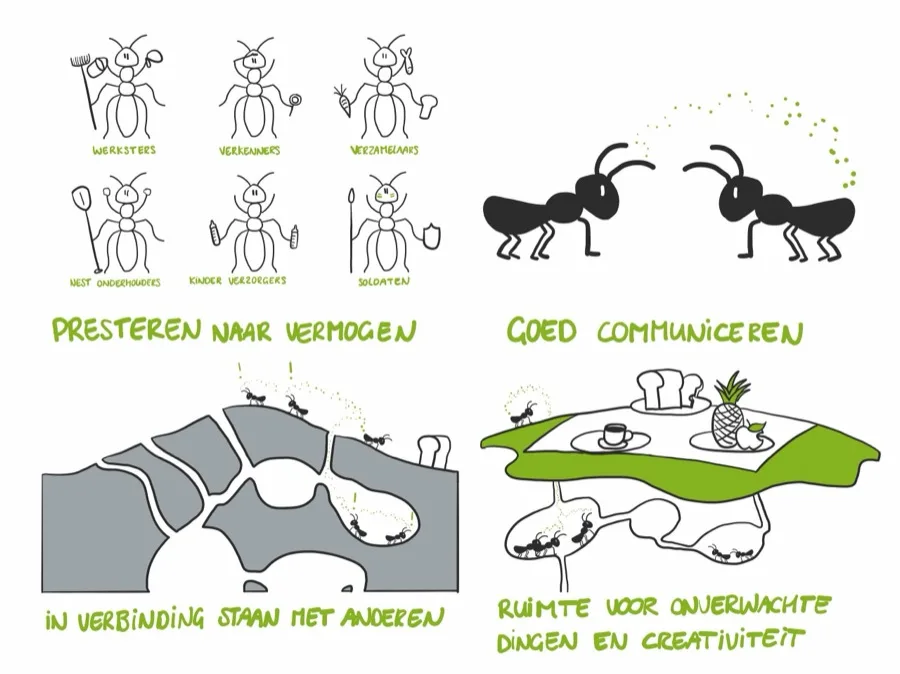
People will increasingly seek out like-minded others, finding joy and happiness in smaller groups with room to develop themselves in a safe environment.
CO₂ production
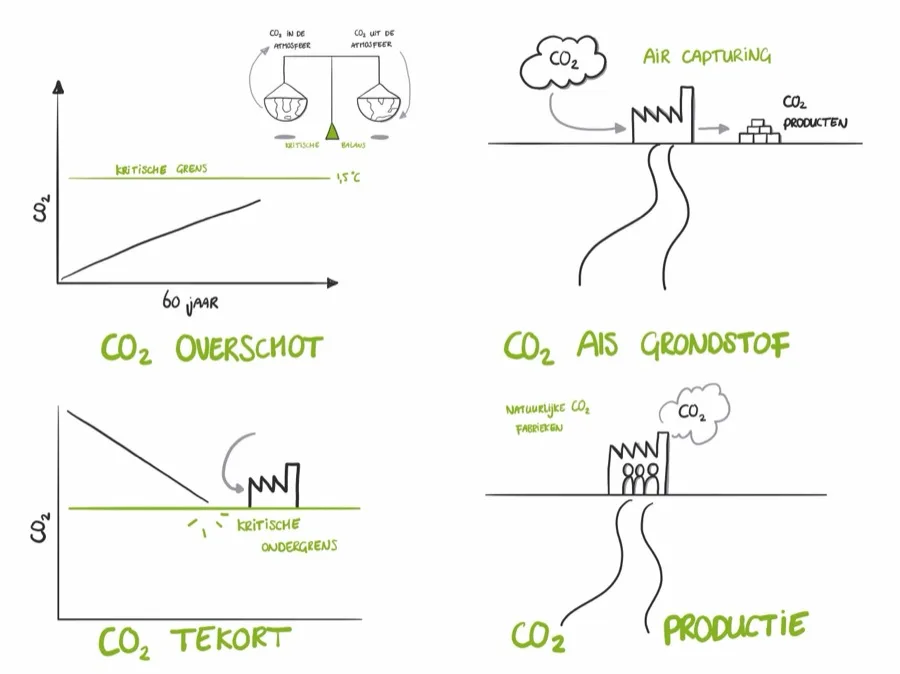
CO₂ is a free raw material available everywhere. Turning CO₂ into building materials and ingredients for the food industry means a shortage of greenhouse gases is on the horizon.
Book & vision
Climate Hearth - A vision for 2050
Written by Els Martijn · Firm of the Future · 2020
Read the whole story in Climate Hearth, available as a book, e-book and audiobook.
Shipping within the Netherlands; free from € 50. Digital editions arrive right after payment.
